
In this worksheet, students will use the Greek or Latin suffixes -ice and -escent to create five different English words out of those given in the word bank. After writing five original sentences using the words these words, students will be asked to circle the word made with the suffix. This is great practice for learning how to use and identify Greek and Latin suffixes!
Greek and Latin Suffixes: -Id and -Onomy/-Nomy

In this worksheet, students will use the Greek or Latin suffixes -id and -onomy/-nomy to create five different English words out of those given in the word bank. After writing five original sentences using the words these words, students will be asked to circle the word made with the suffix. This is great practice for learning how to use and identify Greek and Latin suffixes!
Greek and Latin Suffixes: -Itious and -Ory

In this worksheet, students will use the Greek or Latin suffixes -itious and -ory to create five different English words out of those given in the word bank. After writing five original sentences using the words these words, students will be asked to circle the word made with the suffix. This is great practice for learning how to use and identify Greek and Latin suffixes!
Greek and Latin Suffixes: -Oid and –Itis

In this worksheet, students will use the Greek or Latin suffixes -oid and -itis to create five different English words out of those given in the word bank. After writing five original sentences using the words these words, students will be asked to circle the word made with the suffix. This is great practice for learning how to use and identify Greek and Latin suffixes!
Greek and Latin Suffixes: -Ose and -Ular

In this worksheet, students will use the Greek or Latin suffixes -ose and -ular to create five different English words out of those given in the word bank. After writing five original sentences using the words these words, students will be asked to circle the word made with the suffix. This is great practice for learning how to use and identify Greek and Latin suffixes!
Greek and Latin Suffixes: -Ulent and -Atory

In this worksheet, students will use the Greek or Latin suffixes -ulent and -atory to create five different English words out of those given in the word bank. After writing five original sentences using the words these words, students will be asked to circle the word made with the suffix. This is great practice for learning how to use and identify Greek and Latin suffixes!
Her Story: Sojourner Truth
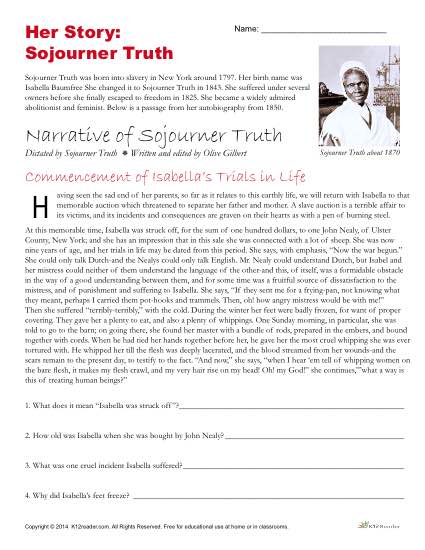
Sojourner Truth was born into slavery in New York around 1797, escaping to freedmom 1825. In this activity, students read the passage and answer related questions.
How Do I Love Thee? Supporting Ideas

Citing text examples is the focus of this poetry worksheet of Browning’s “How Do I Love Thee?”
How to Write a Thesis Statement

This activity helps students develop a strong thesis statement for their essays by providing practice writing sample statements.
How to Write an Introduction: Bridge Building Activity

This activity is designed to help students learn about writing introductions through a fun bridge building activity to join the lead noun card and thesis statement card.
How to Write an Introduction: Different Leads

This is a fun, creative activity where students explore ways to include factoids, stories, metaphors and more to create “hooks”. A great activity to help students develop strong introductions.
How to Write an Introduction: Lead Types

Creating an attention-grabbing lead isn’t always easy but it’s very rewarding to students when they are able to create engaging introductions. This activity provides great practice to build better introductions!
How to Write an Introduction: Lead, Bridge, and Thesis

Let’s combine it all! This activity helps students use thesis statements, bridges and leads to write strong essay introductions.
How to Write an Introduction: Write a Complete Introduction

This activity helps students bring together what they’ve learned to write a complete introduction, including the lead, bridge, and thesis statement.
Identify the Complement

In this activity, students will read sentences that have both subject complements and object complements. They’ll identify which is which.
Idioms and Adages for Christmas

Help your students better understand idioms and adages with this Christmas Phrases Activity. Students will be asked to rewrite each sentence in his/her own words without using the idiom or adage.
Inference in Literature: The Wizard of Oz

“The Wonderful Wizard of Oz” will help your student learn inference.
Inference Practice 2: Where Am I?

Here’s some inference practice for your middle school student.
Irish Proverbs Worksheet Activity

This activity lists some Irish proverbs, and your students will explain what they think each one means.
Irony in Poetry

Two poetry passages from classic literature are the focus of this irony worksheet.